GO UP

Morton God Dolmen

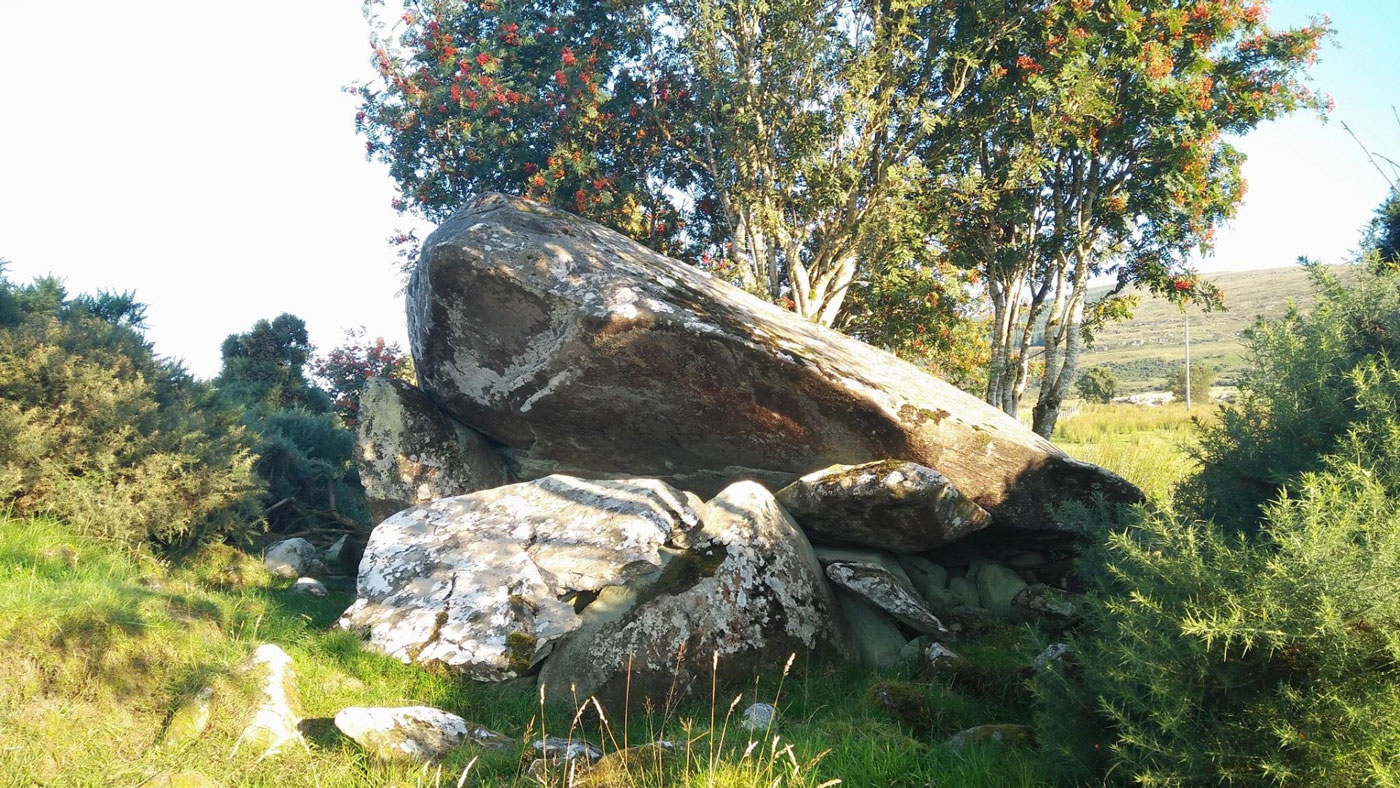
Set high in the hills behind the village of Iskaheen, Morton God Dolmen is one of Inishowen’s most impressive prehistoric monuments. Surrounded by open bogland and sweeping views, this remarkable portal tomb offers visitors a powerful connection to Ireland’s ancient past and the people who lived here over 5,000 years ago.

Often described as the largest portal tomb in Inishowen, Morton God Dolmen is a striking landmark that continues to inspire curiosity, folklore and awe.


A Monument from Prehistoric Ireland

Morton God Dolmen dates from the Neolithic period (approximately 3500–2500 BC), a time when early farming communities began to shape the Irish landscape. These communities built large stone tombs to bury their dead and to mark important ceremonial and territorial locations.

The dolmen consists of two tall upright portal stones supporting a massive capstone, believed to weigh in the region of 30 tonnes. This enormous stone was transported and raised using only basic tools, timber rollers and human labour — a remarkable engineering achievement for its time.

Traces of a stone cairn can still be seen at the base of the monument. Originally, the tomb would have been partly enclosed by this cairn, creating an even more dramatic structure.


From “Druid’s Altar” to Burial Tomb

In earlier centuries, Morton God Dolmen was often referred to locally as a “Druid’s Altar”. While this name captured the imagination, modern archaeological research has shown that portal tombs were not used for sacrifice or ritual worship.

Instead, they served as burial monuments, often containing the remains of important members of the community. Many portal tombs across Ireland predate the arrival of the Druids by thousands of years, belonging firmly to the prehistoric Neolithic era.

The exact origin of the name “Morton God” remains uncertain, adding another layer of mystery to this ancient site.


A Changing Landscape

Today, Morton God Dolmen stands in open bogland, but the surrounding environment would have looked very different at the time of its construction. During the Neolithic period, Ireland had a warmer climate and much of the landscape was covered in forest.

This means the tomb would once have stood on higher, firmer ground, rising above woodland rather than bog. Its elevated position would have made it even more prominent in the landscape — a powerful marker visible from great distances.


Visiting Morton God Dolmen

Morton God Dolmen is accessible by road and makes a rewarding stop for visitors interested in archaeology, history and scenic viewpoints.

Location: Near Iskaheen, Muff, Inishowen

GPS Coordinates:
55.089479, -7.294858

Directions:

  • From Muff village, follow the R238 towards Moville
  • Turn onto the L1891 and continue for approximately 3.25km
  • Pass the church at Iskaheen and continue for a further 0.75km
  • The dolmen is visible from the road on a downward-sloping lane on the left
  • The monument is located approximately 0.25km from the road

Visitors should wear suitable footwear, as the ground can be uneven and wet underfoot. Please respect the site and surrounding farmland.


Nearby Attractions to Explore

While visiting Morton God Dolmen, consider adding these nearby attractions to your itinerary:

Glenlevin Waterfall – One of Donegal’s most popular natural attractions, Glenevin Waterfall offers a scenic woodland walk and spectacular cascading falls.

Moville Shore Walk – A beautiful coastal promenade overlooking Lough Foyle, perfect for a relaxing stroll, coffee stops and seaside views.

St. Columba’s Church at Straid – A historic hillside church ruin near Clonmany, rich in early Christian heritage and offering stunning views across the glen.

Morton God Dolmen
Rating:
Morton God Dolmen
Iskaheen Park, Eskaheen, Co. Donegal, Ireland
Translate »